Eating out can feel tricky when you’re trying to eat balanced meals, but it doesn’t have to be complicated.
With a few mindful strategies and simple swaps, you can enjoy restaurant meals while keeping your nutrition goals on track.
In this blog, we’ll talk through how, with some real-life examples!
1. Prioritize Protein
Protein is essential for feeling full, supporting muscle health, and keeping energy levels steady. When ordering, look for options like grilled chicken, fish, lean beef, tofu, beans, or eggs. Pairing protein with other nutrient-dense foods helps stabilize blood sugar and prevents overeating later.
Better protein swaps when eating out:
- Breaded/fried protein → grilled, baked, or roasted version
- Processed meats (like deli meat or sausage) → lean protein such as chicken, turkey, or fish
- Heavy cream or cheese-based protein dishes → protein paired with vegetables or beans
- Small portion of protein → increase protein portion by adding eggs, beans, tofu, or a side of lean meat

2. Load Up on Vegetables
Vegetables provide fiber, vitamins, and minerals, and they fill your plate without adding excess calories. Aim for half of your plate to be vegetables. You can ask for extra veggies, choose vegetable-forward dishes, or swap less nutritious sides for more colorful produce.
Better vegetable swaps/additions when eating out:
- Fries or chips → steamed, roasted, or sautéed vegetables
- Creamed or cheese-heavy vegetables → plain, lightly seasoned, or roasted vegetables
- Low-veggie side → mixed greens, leafy salad, or vegetable-based soup
- Starchy vegetable sides (like mashed potatoes) → roasted non-starchy vegetables or a side salad

3. Choose Fiber-Rich Carbohydrates
Carbs provide energy, but slow-digesting, fiber-rich options keep you full longer and help stabilize blood sugar.
Carb swaps when eating out:
- White rice → brown rice, quinoa, barley, or farro
- White bread/pasta → whole grain versions
- Fries or chips → baked potato, roasted sweet potatoes, or whole grain salad
- Creamy or fried carb dishes → starchy vegetables or whole grain side
4. Include Healthy Fats
Healthy fats support brain function, hormone balance, and nutrient absorption, while making meals more satisfying. Look for avocado, olive oil, nuts, seeds, or fatty fish.
Healthy fat swaps/additions when eating out:
- Butter or heavy sauce → drizzle of olive oil or tahini
- Fried foods → add avocado, nuts, or seeds to your meal

5. Be Mindful of Portions
Restaurant portions are often larger than needed.
Splitting dishes, ordering smaller portions, or boxing leftovers at the start can help prevent overeating.
Listen to hunger cues and stop when comfortably satisfied.
Portion strategies when eating out:
- Share an entrée with a friend
- Box half your meal for later
- Eat slowly and pause midway to check fullness
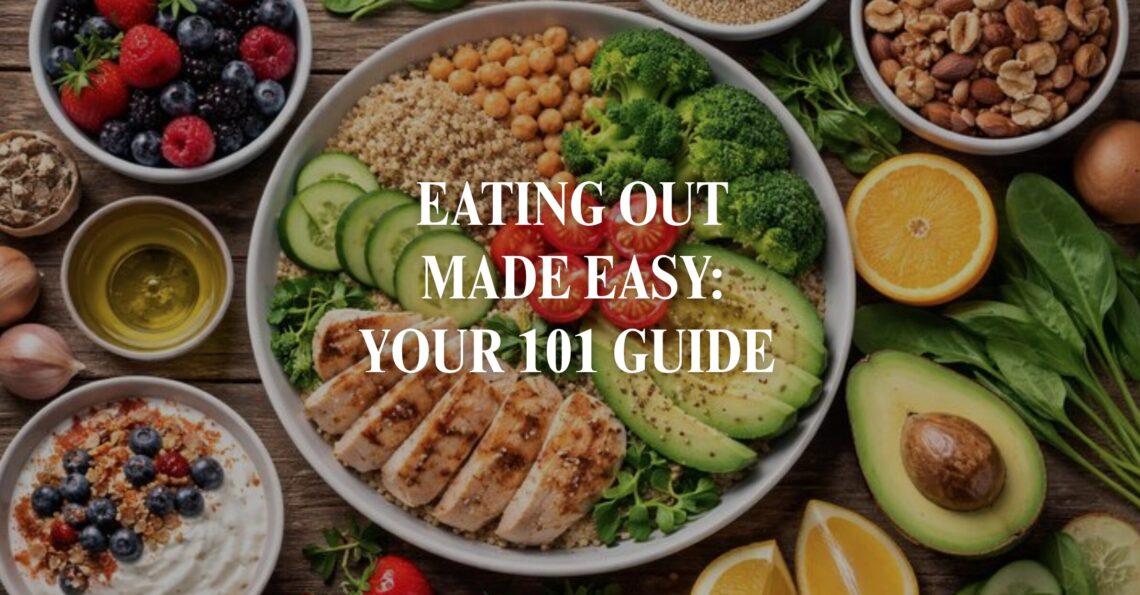
6. Use a balanced plate approach
When in doubt, visualize your plate:
- ½ plate vegetables or fruits
- ¼ plate lean protein
- ¼ plate whole grains or starchy vegetables
- Small amount of healthy fats
This method makes it easier to build satisfying, balanced meals without overthinking!

Final Takeaway
Eating out can absolutely fit into a healthy lifestyle. By focusing on protein, vegetables, fiber-rich carbs, healthy fats, and mindful portions, you can enjoy flavorful meals that nourish your body.
Nutrition is about consistency, balance, and enjoyment, not restriction.
With a little planning and awareness, dining out can support your health goals.
If you loved these tips, you might also enjoy our other blog posts, or follow us on Instagram or TikTok for daily inspiration!
Stay nourished,
The Nourished Dietitians Team